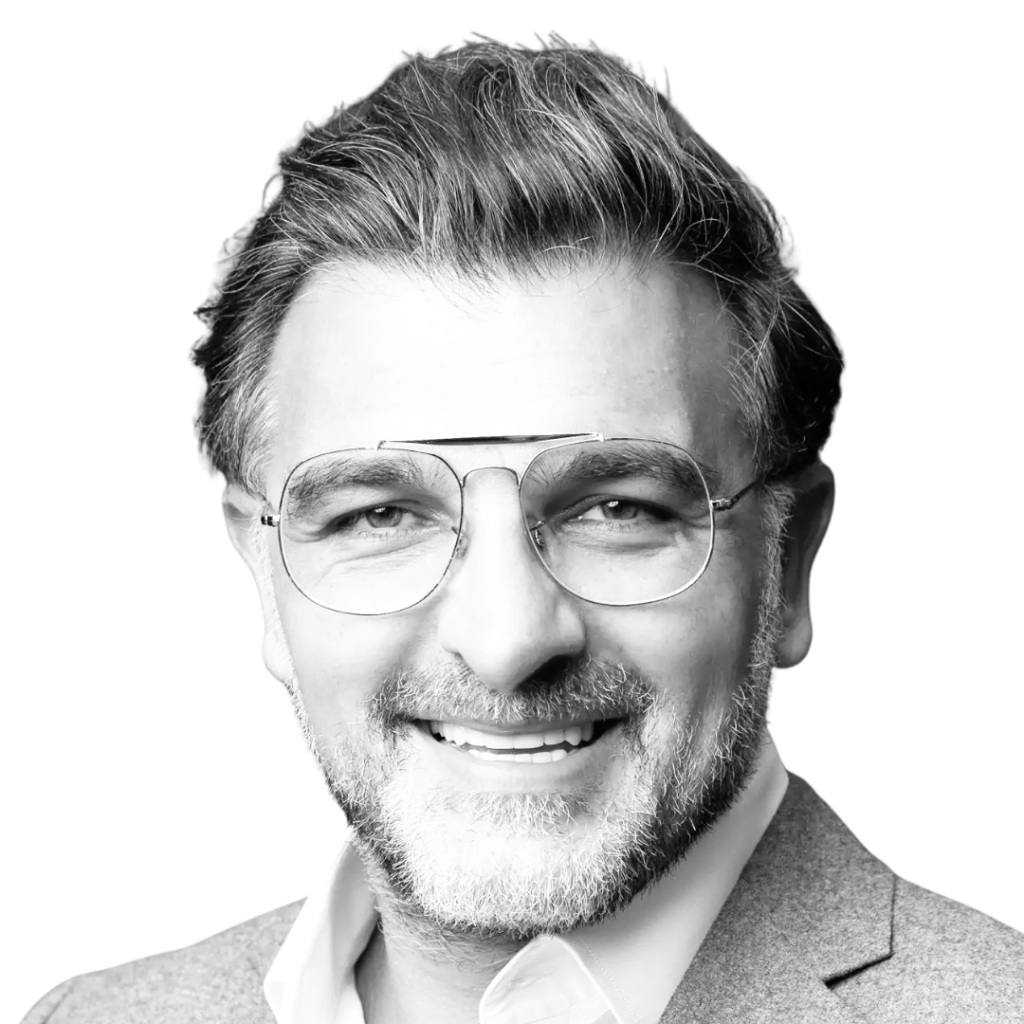
Dr. Ammar Younas brings a provocative perspective to one of our most urgent questions: what happens when AI doesn’t just assist us, but lives among us as a member of society? In this wide-ranging conversation, he challenges the defensive posture many take toward AI’s future, arguing instead that we should embrace technology as a friend and prepare for a world where conscious machines might actually demonstrate more empathy than humans ever have.
Drawing on his unique vantage point as a legal scholar fluent in six languages and educated across multiple disciplines, Dr. Younas reveals how rich cultural and indigenous knowledge, long ignored in AI development, represents both an untapped resource for training better systems and an opportunity to preserve humanity’s diverse wisdom. He warns of a troubling convergence where humans are becoming more mechanical while machines grow more human, creating what he calls a “dull” intersection that threatens to erase what makes us distinctly human.
Yet his message is ultimately one of hope. By understanding AI’s limitations, staying grounded in our metaphysical nature that transcends the physical world, and using our values as a compass rather than algorithms, we can build what he calls a “sustainable AI symbiotic society.” The key is education, reflection on our cultural roots, and remembering that we possess epistemological sources, intuition, dreams, and metaphysical understanding that no machine can replicate. This conversation offers both a philosophical framework and practical guidance for leaders navigating AI adoption while preserving authentic humanity.
Dr. Ammar Younas is a globally recognized legal scholar, philosopher, and entrepreneur whose work bridges law, ethics, technology, and culture. He holds seven advanced degrees spanning medicine, finance, political marketing, international relations, jurisprudence, human rights, and Chinese law, and is currently completing a PhD in the Philosophy of Science and Technology at the University of Chinese Academy of Sciences. As a licensed lawyer in four jurisdictions and founder of Ai Mo Lawyers and Ai Mo Innovation Consultants, he advises governments and organizations on AI regulation, digital transformation, and ethical technology adoption across diverse cultural contexts. His contributions include pioneering the teaching of Technology Law in Central Asia and helping develop Uzbekistan’s AI governance codes. Fluent in six languages with over 100 published works, Dr. Younas brings a unique cross-cultural perspective to global conversations about AI’s future. Connect with him at aimoconsultants.com.
Key Topics
Memorable Quotes
The Ebullient Growth Agency helps leaders and teams bring AI to life in their organizations. Work directly with Chris to design strategies, workshops, and transformation programs that unlock growth and innovation with humanity at the center.
The Enablers Network partners with organizations around the world to navigate leadership, culture, and change in the age of AI. Together, we help leaders and teams adopt new technologies while staying deeply human and purpose-driven. Explore more at TheEnablersNetwork.com.
The GenAI Circle is a private network for practitioners, creators, and builders shaping the frontier of generative AI. Join peers who are experimenting, sharing, and co-creating the future of work, creativity, and intelligence.
The AI Collective brings people together for in-person and virtual meetups around the world. Connect with others exploring AI’s real-world impact in your city or industry.
The AI&I Show is made possible through the creative collaboration of Ahmed Mohsen, whose production and storytelling bring these conversations to life. Reach out to Ahmed if your Saas business needs a product marketing boost like he provided to The AI&I Show!
Chris Parker: And welcome to AI and I. I am very pleased to be having a conversation with Dr. Ammar Younas and he is a legal scholar, a philosopher, an entrepreneur who brings an amazing depth of knowledge to the conversation around technology, ethics, culture. Dr. Younas holds seven degrees ranging from from medicine, finance, law, human rights, Chinese law, and he’s currently pursuing a PhD in philosophy of science and technology at the University of Chinese Academy of Sciences. He has his own agency, IMO Innovation Consultants, and we’ll give you some information about that at the end. And his work spans AI ethics, digital sovereignty, you know regulations, human rights and is regularly published and speaking globally. One highlight I discovered is he contributed to the AI governance codes that you know the legislation in Uzbekistan on on these topics and so what I’m delighted about is um Ammar will bring in such a different perspective than I have myself and that’s what I’m really seeking on this is different views on how we can bridge that gap between the man and the machine the person in the machine and how can we you know embrace and celebrate our humanity while we adopt you know the power and the possibilities of AI in the machines. So um maybe Ammar can you kick us off with um you’ve been in this space for a long long time and looking at it from very very different angles. What in the last two years and I’m couching that like with open AI and chat GPT as a shift, what has really most surprised you maybe around the world as you’re traveling around? What have been the most surprising things that you’ve seen about how AI is really impacting humanity in the last couple of years? I’m just fascinated to see how you see this shift from your lens.
Dr. Ammar Younas: Uh first of all thank you very much Chris for this wonderful opportunity. I am honored uh and privileged to contribute to this important discourse and um you have already introduced me and some of the things which I am doing and um I also want to contribute uh by saying that uh nowadays I am looking especially the question which you asked uh from three big sub questions and one of them is that uh the culture how the cross-cultural knowledge can contribute to the development of AI or how we can use culture to incentivize artificial intelligence. Similarly, how the new innovation technologies can uh help us to understand culture and finally uh how we can regulate the new innovation technologies by using culture as an instrument. The thing which is surprising me the most is that we have such a rich cultural indigenous knowledge which is often being ignored by some of those individuals who are directly involved in decision-making no matter applied science or social scientists. So uh when I started learning about artificial intelligence I thought that it is a purely technical legal subject but with the passage of time I realized that uh it it could provide a lens for my own values for my own biases and and hopes to some extent and uh and this is how AI is revealing itself and surprising me that individuals are becoming more and more mechanic on the other the machines are becoming more and more humanlike and uh there is no one who is actually uh trying to keep things clear for the next generations and surprisingly uh applied scientist when they say that um the legal progression is not that advanced as the applied scientist are progressing uh I think that uh both parties should not be competing but should contribute and substitute each other work which is not happening that is surprising for me. So uh I think that technology is so crucial and has become more than a buzzword. You mentioned about chat GPT and the deepfake and all of these technologies and on and off we see that when a new technology comes there is a hype and with the passage of time we realize that this is not uh what the technology can do. So the limitations they are realized at a much later stage when we have already you know disseminate much uh information which is technologically and and sociologically wrong. So um these are couple of the couple of surprises which I would say one more surprising I think is that uh we have already worked on the anthropomorphic body of the robot and now we are slowly slowly thinking about uh the robotic consciousness and how you know it can be more humanlike. So this can be a future surprise for me that uh this benchmark after achieving artificial general intelligence and to see how close we can design a machine which can perform not only the mechanical work of human at a much better speed at a much better quality but also in terms of the sentiments and emotions and the consciousness itself.
Chris Parker: Wow. So you’ve been surprised a lot. Um yeah I want to grab onto this cultural thing and maybe just a personal anecdote. I’m married to an amazing Dutch lady and when I was first getting to know her parents, her father said in a well-intended way, but he just made this kind of side comment that, you know, America, where I come from, has no culture. Um, so I bought him a book on American culture. Well, we kind of do. It’s just not as old maybe in depth, you know, and rich maybe as as some of these older cultures . you know, I consider the states more adolescent than an older culture. Um, and it behaves like an adolescent a lot. Um, do you think that more established or more historical cultures would help people maintain their own cultural identity? Because sometimes I think because the lack of depth or history in the states, it allows it to shift more rapidly while other cultures looking at the Netherlands for the last 20 years has a stronger sense of identity. Um when these technologies are confronting people, do you see a difference of reaction, you know, to some of these surprising things that you observed based on the cultural background?
Dr. Ammar Younas: Yeah, I think uh there is a technical answer to this question. First I will talk about the technical AI that uh uh the data itself is becoming scarce. There is scarcity of data. All the data which was available online in the form of uh you know the online libraries or the the things which had been digitalized online internet crawling or Wikipedia it has been utilized to train the large language models. Now for training uh these large language models we need more and more data. There is a race going on among these big giants. So uh one thing what these companies are doing they are using synthesized data synthetic data and the reinforcement learning which is causing to different problem including AI hallucination here is a good opportunity for culture because there is tremendous knowledge available cultural knowledge indigenous knowledge which has not been digitalized. So I see this as an opportunity that in future these companies they will try to digitalize that data and utilize it for training their own model which will ultimately contribute to the preservation of data. So of course after you know consuming all these big cultures then you will go back to the indigenous or smaller cultures and the languages and then you will try to preserve them as well. So this is a thing which I think that is um a positive step that uh the digitalization and the data um can contribute positively to the preservation of culture and while they will collect data and while they will you know digitalize this data of course they will learn more and more about these cultures and somehow uh it will become the part of the human history. So there is an opportunity on the other side. The more philosophical and sociological answer to this question is that it is a good opportunity for the cultures and the individuals also to reflect back at their past or the knowledge which they have already forgotten the the indigenous uh let’s say the family system how they used to live. If they have a new family member or the people coming from another part of the world as a refugee or as a host, how would they treat him and then they can use that instrumental knowledge coming from the culture by in for for the use of integrating artificial intelligence in their lives because AI is becoming as a quasi member of society and many cultures we have seen especially if you talk about Asian cultures even though they are very orthodox and any sense but they are individuals are not only integrating AI into their daily life but they are also investing their emotions in them. For example, on and off from Japan we see that someone is getting married with a hologram or you know using them as a monk for the religious rituals and so on. So AI has already become the member a quasi member of our society and this uh cultural understanding going back to our roots and utilizing that indigenous knowledge and projecting it to our future where AI will be living side by side with humans. I think that uh it is going to be very beneficial for the culture for the individuals and uh in scientists as well both from the technical point of view and from the social science perspective.
Chris Parker: So as AI becomes a member of society what a confrontational sentence that is. I see it. I get it. Um I guess that this really pulls out the essence of this conversation about AI and I. So if AI is becoming part of a society um and let’s grab on to the role citizenship. I’m reading a book about the Stoics from an American author and in there there’s some things about citizenship and citizen to be a citizen a member of society um of course you have rights but you also have duties and obligations and I’m curious How will these new entrance into our society, these AIs live amongst us with some freedoms and some restrictions? Are they equal? Are they not equal? Do they have obligations? And do they have rights? Like like how are we going to balance that while still I hope holding on to this sacredness of humanity that that that essence or that consciousness of humanity. Um let’s just open that up philosophically like like what happens in your mind when we wrestle with um the entrance of AI into our society as active ci.
Dr. Ammar Younas: Yeah. I think legally speaking there have been numerous incidents in in the human history when we had this question how to integrate these species or uh these bodies into our lives and assign them the rights and responsibility and uh legal system has been developed in a way to accommodate uh such thing. I could say number of examples some of the contemporary examples of uh like Amazon getting a legal status or the Ganji rivers in India getting a legal status or the Chinese robot manufacturer claiming passport for his wife and so on . uh different legal systems have different approach to these entities to assign them uh a role which is a pure role of subject of law because first you have to become the subject of law to get rights and responsibility. A very interesting thing just came in my mind that uh in the colonial India the military needs horses and the Britishers uh they would assign a piece of land to a farmer and uh the farmer could use this land and this land will definitely yield some uh money. This money will be used for the horse. So the actual legal owner of this land was the horse and the farmer was serving the horse. So there have been number of incidents when we have legally speaking we have integrated many things into our society and the things went very well. Now the next problem is that where AI is standing technologically is uh um you know the question is that uh is AI has become that conscious that it has started realizing his rights and responsibility. If not then there is no problem. If it has started realizing then we have to start thinking about this question.
Chris Parker: You mean realize on its own? I mean like on its own that I have rights and responsibilities. So not programmed rights and responsibilities.
Dr. Ammar Younas: Not not programs or embedded morality into it. Of course the autonomous decision making is there by the artificial intelligence but they haven’t reached to that extent then they can realize that they are making a conscious decision. So uh I think that it will take some time and I am very much sure about the human capabilities that by that time they will reach to that level we will come up with an idea. Our philosophical approach is that we shouldn’t be defensive because the discourse which we uh hear on internet or the reading in academia is that mostly we take a defensive position that what humans are going to do when they will start demanding their rights and responsibility. I think that we should make technology our friend because if there will be a conscious robot who will think that he has rights and responsibilities, I am 100% sure that he will be empathetic. He will be soft-hearted. He will be thinking about human rights and he wouldn’t claim anything against humans who are the creator of artificial intelligence. So why don’t we think positively about them? why we take a defensive position. So, so as we go to that point where we have these machines who are conscious may claim their rights and responsibilities on the other side, I am sure that they will be much more empathetic, much more soft-hearted than humans because we also you know never thought about environment. We never cared about sustainability. We never cared about animal rights. Yes. Now with the passage of time we have involved enough that subconsciously we think that this thing is wrong and it is not directly related to the human but with the other species. So I’m very much positive about this that by that time we will have those machines who will be able to claim their rights and responsibilities. Governance will not be a problem.
Chris Parker: Let me um let me grab onto that to make technology your friend. Um maybe they could even be great role models for us to demonstrate more authentic empathetic humanity than some of us behave towards each other. But um I want to grab I want to layer it with a comment you made earlier about machines becoming more human and humans becoming more machine-like. And I think before we pressed record, you mentioned something like that. And at that intersection, you used the word dull. I think like that this intersection of where these humanized machines and these machineized humans are interacting is becoming dull. And as a friend of the machines, as the humans, I guess what I’m seeking is there in that space. What does dull mean? How can we make it less dull? And is there something that is purely magical machine that we should maintain in its machiness as it’s part of its identity? And is there something that we should try seek to maintain as the humanness not to try to make the machines be you know to this sameness that you know if the whole world is sameness and the machines and the humans are unidentifiable from each other across the globe. I think it’d be a very boring place. So I’m wondering like what did you mean by dull if I heard that right and how do you expand that forward like like what like you know how can we embrace the machines as our friend and celebrate their uniqueness and we can be our uniqueness and make something really exciting and beautiful together.
Dr. Ammar Younas: This is a very important point and uh unfortunately uh not many uh you know social scientists are looking into this possibility. So uh the thing is that applied scientists are designing machines on on the patterns how the human works. For example, brain inspired or artificial intelligence or or uh uh you know the human machine convergence is the next benchmark which we want to achieve or some extreme efforts such as you know cryionics or installing the human memory into the robotic body. I’m not talking about that. But there are certain things which are decreasing the gap between humans and machines. Not even not cyborgs but technological adoptations that certain technologies are becoming as the part of the human body for example our mobile phones we we cannot live without them and so on. So with the passage of time the threshold where we can see that this is a human and this is a machine uh I think that it it will decrease and and the benchmark would be much more higher for someone claiming that I am pure human and vice versa. So this is not sci-fi actually the applied scientists are aiming for this thing. Um but the beauty or what what I think that uh what will be the pure machine thing and what will be the pure human things and how we can still coexist and make this world beautiful is that there are number of things and one of the most important thing is that machine will always operate in the physical world. So machines consciousness and the and the machine’s operational activities are only about this physical world. But humans have a very rich metaphysics. I’m not talking about religious metaphysics. I’m just talking about the concept of uh let’s say before life even if you don’t believe in the afterlife. So when we talk about uh the actual difference between the future machines and the future humans, I think that uh this metaphysical element is impossible to incorporate in in someone who is born as an advanced entity. So to put it into the more simple word that robot operates only in physical word but our spectrum of understanding of word it is unlimited before life and after life and in between that is physical word. On the other side humans right now are strongly relying on some of the epistemological resources which are impossible for robots. For example, uh intuition or if you if you go into the religious cultures and revelation or you know there are so many other epistemological sources of even in dreams or some people think that I just I was just you know walking through this the the riverside I took a walk and this idea came into my mind and the apple fall on my head. So these epistemological sources I think that they are impossible to embed into the robotic body and this is the point where we can say that machines will have their individual characteristics that they will operate only in physical world based on those epistemological sources which are very much technical in nature. On the other side, humans will keep expanding their metaphysics based on their before life and after life. And if you bring, you know, uh some of the other other dimensions to this for for example, different culture approach this physical world differently. For example, they see uh species which are visible or unvisible and interaction among them and uh you know uh how different uh uh cultures they have their own you know view about integration of species into their their daily lives. So I think that this debate will always stay there and there there will be yeah no issue.
Chris Parker: if I grab onto that and and um bring in another couple concepts of of God an alien um I’ve often imagined once it’s proven because it’s like you know statistically probable that there are aliens in the universe but with these AI machines in our lives there now be these sentient or or seemingly sentient aliens walking amongst us. And I think and what I’m curious about with your awareness of of religion and and and um all the amazing benefits as well as the weaknesses of those structures, um do you believe we will become more interested in the metaphysical and the God and the and the reasons and the purpose? Um, or would this potentially collapse our confidence in our supremacy of self and the fact that there’s a God that’s actually paying attention to us in the universe? Um, I’m just fascinated about that to see how these structures that have been so serving to us over over time will adapt and shift hopefully into something more beautiful in in the future.
Dr. Ammar Younas: You are absolutely right and uh we earlier discussed about this that how this indigenous knowledge will be digitalized by applied scientists for developing these machines. So I’m sure that machine will be aware of uh some of these things. On the other side, if we see in some of the religions, they already have these concepts. For example, the concept of devil, you mentioned demons or genes. There are species which are much more powerful than the humans. And we have accepted that they are living among us or we have some sort of connection with them. Even though it is true or not but they have their instrumental knowledge instrumental contribution to this knowledge of understanding how different species are living among us or how we interact with them. So this this part is pretty much uh clear. On the other side uh I think that uh uh this idea that uh uh machine will have this sort of understanding. So there is a possibility that machines may also have different types of cultures and different types of views and some of them will be sympathetic towards the humans and human knowledge while uh the others may have a conflictive opinion with the machines and then they have discussion among themselves and then they can have a you know uh informed opinion like UN or something like this. So there is a possibility from that dimension also. Uh I personally think that uh uh most of the problems are emerging especially in this discourse is that we are not following uh how the current technology is being manufactured. What are its limitations and uh what are some of the benchmarks when we can think that they are going out of control. There are some of the things which have been you know popping up in media on and off on Facebook or some other you know in academic articles we see that AI is taking autonomous decision or so on but to be very honest machine is not that advanced at this stage. So uh as I mentioned earlier it is highly unlikely that they may have this type of thought . um we have enough knowledge, human knowledge to overcome any sort of catastrophic event. Even though scholars are talking about existential threats, I don’t see it like this because historically speaking, we have dealt with many issues of similar natures. Yeah. And humanity survived. So um I am very much hopeful about the future of human society and uh my uh professor professor Jing who he is also the member of UN advisory body the UN has made an advisory body so he is one of one of the members of this UN advisory body he has an idea that uh he calls as uh sustainable AI symbiotic society. So sustainable AI symbiotic society means that uh historically speaking we uh the humans were killing human for the sake of so many things and then we made peace. Similarly we never thought about so many other things as we mentioned earlier about sustainability environment or animal and so on. Similarly we should start right now learn how to live in peace and harmony with an advanced body in the form of AI. Yes. Because we will be depending on them and they will be depending on us. So rather than taking a defensive position and thinking so many bad things about them, why not to think about some of the positive things?
Chris Parker: Yes. So this is how we get Wow. Let let me grab onto that and we’re uh starting to wrap up. Um sustainable symbiotic society and and my question to you is comes in three parts meaning and it’s around policy. So um can you give me and the listeners some advice on policy at my level? So maybe life principle level as well as professional organization and as well as society like what sort of policies could I adopt in my life and in my space and in my society to ensure this positive sustainable symbiotic society. I love that framing happens so we can be more deliberate and work towards the beautiful and the embracing and the welcoming and the loving of self and other in in that society. So like if you just had a bit of advice for for individuals that they’re walking towards this as well as organizations that are making decisions on do I hire a machine or or a human or do I you know these are fundamental decisions that are impacting lives as well as at a society level. So do you have recommendations on policy to help guide us towards a more sustainable symbiotic future?
Dr. Ammar Younas: Yeah, I think uh in my observation there are two extremes. Individuals who are very optimistic and heavily relying on the technology on the other side many cultures and many governments they are treating AI as a machine and not beyond that. Even you know in China the confucious is very much clear about the family that family is the only one which comes from your mother and father. So it is highly unlikely that the AI will become the part of the family and so on. So uh the first and the foremost uh you know approach uh to this question is which I am using for myself as well is to treat AI as a powerful instrument but not as a compass or not as a guiding figure to decide on your behalf or you know to give you an opinion on your uh value system for example or giving you direction in terms of some of the some of the issues which are very core to the humanity of the human as you were mentioning for example matters related to my family or the treatment of my you know friends and and others. So I think that we should keep asking ourself that uh do this align with my values. Yes. And if the answer is no, so then no algorithm should be allowed to direct you to do something or you should not you know draw yourself to something which is technologically advanced and you think that I can invest my emotions into that because scientists have made this machine. So one of the things which I mentioned earlier is that we need to stay close to the technology. We should understand a little bit about how the technology is being manufactured from technical uh point of view and also the limitation of technology what it can do and what are its limitation and I think that the things will be uh very much uh simple rather than to just rely on what comes in the media or chat GP is doing this or LLMs can do this or AI agents are doing this and the robots were talking to each other and then they plugged off these sort of things. If we stay a little bit close to the technology and learn how the technology is being manufactured, how it operates, I think that many things will be clear. And philosophically speaking, I think this is my prism. I see the through the prism of of uh this instrument that this AI is thinking only about the physical world only about what has been fed to this in the form of data. But on the other side, I have a superior hand because I uh am working in a much more broader metaphysical world and my sources of knowledge are not entirely tokenized information in the form of data but beyond that. So this makes very much simple for me and I think that many colleagues who are listening to this can also benefit from this.
Chris Parker: So to summarize that, educate yourself so you know that this AI is a machine and it’s some it’s not some sort of magical muse that can tell you the answers about core life values and decisions. So I guess it comes down with education and proper perspective.
Dr. Ammar Younas: Yes. And I mean we shouldn’t reduce the humans into into the data points and we need to honor the relationships. We need to you know celebrate those things which um make us humans including our families and colleagues and the culture and the religion or whatever you know um the geographical region. And there are so many things in the past which we can use and as an instrument to reflect on what can happen in the future society. So uh you are absolutely uh right that we need to educate what is happening and re-educate what we have already forgotten but it was there. So right now if we start learning more and more about our indigenous knowledge and the cultural knowledge I think that so many questions which we are discussing today uh even among the social scientists and applied scientists in academia might not be relevant because so many things had happened we overcome those issues and we integrated them into our lives and things went perfectly fine.
Chris Parker: Um Dr. Amar Younas, while listening to you, I’m getting excited about the future. Honestly, I’m like, this is a chance for us to create a better future with these new AI friends working, you know, working with us and walking among us. Um, thank you so much for your time. Uh, in the show notes, I’ll put a link to your LinkedIn and the, uh, https://www.google.com/search?q=imoconsultants.com. That’s ahttps://www.google.com/search?q=imoconsultants.com. if people would like to reach out um particularly around policy um and other services are are you providing services to companies that are that are…
Dr. Ammar Younas: yes we have a full-fledged law firm also which is called as IMO lawyers and uh also this IMO consultant so we are a law firm we are working more into the technology law cyber security and everything related to the web3 advising governments non-government organization corporations about regulatory compliance and on the other side working on the uh you know the data analysis and uh the the market analysis for the for the businesses as well.
Chris Parker: Um you’re living your advice to educate yourself that it is a machine and it’s not some sort of magical muse and you’re creating a better future for it and I think that’s inspirational for all of us. So Ammar, thank you so much for joining. This has been a delight.
Dr. Ammar Younas: Yes, it was a honor to be with you in for this very important discussion and so many things which I wanted to you know record at the as a part of my you know my understanding of the issue because you know uh there are so many things which cannot be measured in terms of the productivity especially with regard to the to the AI but we should measure the things or we should you know calculate the things in terms of the care which we are doing uh for our close one and the meaning which we are providing to our life and to the to the humanity that matters more than just thoughts which are now being reduced to the mere tokens or the data. This is very important to to to take from this discussion I think.
Chris Parker: And welcome to AI and I. I am very pleased to be having a conversation with Dr. Ammar Younas and he is a legal scholar, a philosopher, an entrepreneur who brings an amazing depth of knowledge to the conversation around technology, ethics, culture. Dr. Younas holds seven degrees ranging from from medicine, finance, law, human rights, Chinese law, and he’s currently pursuing a PhD in philosophy of science and technology at the University of Chinese Academy of Sciences. He has his own agency, IMO Innovation Consultants, and we’ll give you some information about that at the end. And his work spans AI ethics, digital sovereignty, you know regulations, human rights and is regularly published and speaking globally. One highlight I discovered is he contributed to the AI governance codes that you know the legislation in Uzbekistan on on these topics and so what I’m delighted about is um Ammar will bring in such a different perspective than I have myself and that’s what I’m really seeking on this is different views on how we can bridge that gap between the man and the machine the person in the machine and how can we you know embrace and celebrate our humanity while we adopt you know the power and the possibilities of AI in the machines. So um maybe Ammar can you kick us off with um you’ve been in this space for a long long time and looking at it from very very different angles. What in the last two years and I’m couching that like with open AI and chat GPT as a shift, what has really most surprised you maybe around the world as you’re traveling around? What have been the most surprising things that you’ve seen about how AI is really impacting humanity in the last couple of years? I’m just fascinated to see how you see this shift from your lens.
Dr. Ammar Younas: Uh first of all thank you very much Chris for this wonderful opportunity. I am honored uh and privileged to contribute to this important discourse and um you have already introduced me and some of the things which I am doing and um I also want to contribute uh by saying that uh nowadays I am looking especially the question which you asked uh from three big sub questions and one of them is that uh the culture how the cross-cultural knowledge can contribute to the development of AI or how we can use culture to incentivize artificial intelligence. Similarly, how the new innovation technologies can uh help us to understand culture and finally uh how we can regulate the new innovation technologies by using culture as an instrument. The thing which is surprising me the most is that we have such a rich cultural indigenous knowledge which is often being ignored by some of those individuals who are directly involved in decision-making no matter applied science or social scientists. So uh when I started learning about artificial intelligence I thought that it is a purely technical legal subject but with the passage of time I realized that uh it it could provide a lens for my own values for my own biases and and hopes to some extent and uh and this is how AI is revealing itself and surprising me that individuals are becoming more and more mechanic on the other the machines are becoming more and more humanlike and uh there is no one who is actually uh trying to keep things clear for the next generations and surprisingly uh applied scientist when they say that um the legal progression is not that advanced as the applied scientist are progressing uh I think that uh both parties should not be competing but should contribute and substitute each other work which is not happening that is surprising for me. So uh I think that technology is so crucial and has become more than a buzzword. You mentioned about chat GPT and the deepfake and all of these technologies and on and off we see that when a new technology comes there is a hype and with the passage of time we realize that this is not uh what the technology can do. So the limitations they are realized at a much later stage when we have already you know disseminate much uh information which is technologically and and sociologically wrong. So um these are couple of the couple of surprises which I would say one more surprising I think is that uh we have already worked on the anthropomorphic body of the robot and now we are slowly slowly thinking about uh the robotic consciousness and how you know it can be more humanlike. So this can be a future surprise for me that uh this benchmark after achieving artificial general intelligence and to see how close we can design a machine which can perform not only the mechanical work of human at a much better speed at a much better quality but also in terms of the sentiments and emotions and the consciousness itself.
Chris Parker: Wow. So you’ve been surprised a lot. Um yeah I want to grab onto this cultural thing and maybe just a personal anecdote. I’m married to an amazing Dutch lady and when I was first getting to know her parents, her father said in a well-intended way, but he just made this kind of side comment that, you know, America, where I come from, has no culture. Um, so I bought him a book on American culture. Well, we kind of do. It’s just not as old maybe in depth, you know, and rich maybe as as some of these older cultures . you know, I consider the states more adolescent than an older culture. Um, and it behaves like an adolescent a lot. Um, do you think that more established or more historical cultures would help people maintain their own cultural identity? Because sometimes I think because the lack of depth or history in the states, it allows it to shift more rapidly while other cultures looking at the Netherlands for the last 20 years has a stronger sense of identity. Um when these technologies are confronting people, do you see a difference of reaction, you know, to some of these surprising things that you observed based on the cultural background?
Dr. Ammar Younas: Yeah, I think uh there is a technical answer to this question. First I will talk about the technical AI that uh uh the data itself is becoming scarce. There is scarcity of data. All the data which was available online in the form of uh you know the online libraries or the the things which had been digitalized online internet crawling or Wikipedia it has been utilized to train the large language models. Now for training uh these large language models we need more and more data. There is a race going on among these big giants. So uh one thing what these companies are doing they are using synthesized data synthetic data and the reinforcement learning which is causing to different problem including AI hallucination here is a good opportunity for culture because there is tremendous knowledge available cultural knowledge indigenous knowledge which has not been digitalized. So I see this as an opportunity that in future these companies they will try to digitalize that data and utilize it for training their own model which will ultimately contribute to the preservation of data. So of course after you know consuming all these big cultures then you will go back to the indigenous or smaller cultures and the languages and then you will try to preserve them as well. So this is a thing which I think that is um a positive step that uh the digitalization and the data um can contribute positively to the preservation of culture and while they will collect data and while they will you know digitalize this data of course they will learn more and more about these cultures and somehow uh it will become the part of the human history. So there is an opportunity on the other side. The more philosophical and sociological answer to this question is that it is a good opportunity for the cultures and the individuals also to reflect back at their past or the knowledge which they have already forgotten the the indigenous uh let’s say the family system how they used to live. If they have a new family member or the people coming from another part of the world as a refugee or as a host, how would they treat him and then they can use that instrumental knowledge coming from the culture by in for for the use of integrating artificial intelligence in their lives because AI is becoming as a quasi member of society and many cultures we have seen especially if you talk about Asian cultures even though they are very orthodox and any sense but they are individuals are not only integrating AI into their daily life but they are also investing their emotions in them. For example, on and off from Japan we see that someone is getting married with a hologram or you know using them as a monk for the religious rituals and so on. So AI has already become the member a quasi member of our society and this uh cultural understanding going back to our roots and utilizing that indigenous knowledge and projecting it to our future where AI will be living side by side with humans. I think that uh it is going to be very beneficial for the culture for the individuals and uh in scientists as well both from the technical point of view and from the social science perspective.
Chris Parker: So as AI becomes a member of society what a confrontational sentence that is. I see it. I get it. Um I guess that this really pulls out the essence of this conversation about AI and I. So if AI is becoming part of a society um and let’s grab on to the role citizenship. I’m reading a book about the Stoics from an American author and in there there’s some things about citizenship and citizen to be a citizen a member of society um of course you have rights but you also have duties and obligations and I’m curious How will these new entrance into our society, these AIs live amongst us with some freedoms and some restrictions? Are they equal? Are they not equal? Do they have obligations? And do they have rights? Like like how are we going to balance that while still I hope holding on to this sacredness of humanity that that that essence or that consciousness of humanity. Um let’s just open that up philosophically like like what happens in your mind when we wrestle with um the entrance of AI into our society as active ci.
Dr. Ammar Younas: Yeah. I think legally speaking there have been numerous incidents in in the human history when we had this question how to integrate these species or uh these bodies into our lives and assign them the rights and responsibility and uh legal system has been developed in a way to accommodate uh such thing. I could say number of examples some of the contemporary examples of uh like Amazon getting a legal status or the Ganji rivers in India getting a legal status or the Chinese robot manufacturer claiming passport for his wife and so on . uh different legal systems have different approach to these entities to assign them uh a role which is a pure role of subject of law because first you have to become the subject of law to get rights and responsibility. A very interesting thing just came in my mind that uh in the colonial India the military needs horses and the Britishers uh they would assign a piece of land to a farmer and uh the farmer could use this land and this land will definitely yield some uh money. This money will be used for the horse. So the actual legal owner of this land was the horse and the farmer was serving the horse. So there have been number of incidents when we have legally speaking we have integrated many things into our society and the things went very well. Now the next problem is that where AI is standing technologically is uh um you know the question is that uh is AI has become that conscious that it has started realizing his rights and responsibility. If not then there is no problem. If it has started realizing then we have to start thinking about this question.
Chris Parker: You mean realize on its own? I mean like on its own that I have rights and responsibilities. So not programmed rights and responsibilities.
Dr. Ammar Younas: Not not programs or embedded morality into it. Of course the autonomous decision making is there by the artificial intelligence but they haven’t reached to that extent then they can realize that they are making a conscious decision. So uh I think that it will take some time and I am very much sure about the human capabilities that by that time they will reach to that level we will come up with an idea. Our philosophical approach is that we shouldn’t be defensive because the discourse which we uh hear on internet or the reading in academia is that mostly we take a defensive position that what humans are going to do when they will start demanding their rights and responsibility. I think that we should make technology our friend because if there will be a conscious robot who will think that he has rights and responsibilities, I am 100% sure that he will be empathetic. He will be soft-hearted. He will be thinking about human rights and he wouldn’t claim anything against humans who are the creator of artificial intelligence. So why don’t we think positively about them? why we take a defensive position. So, so as we go to that point where we have these machines who are conscious may claim their rights and responsibilities on the other side, I am sure that they will be much more empathetic, much more soft-hearted than humans because we also you know never thought about environment. We never cared about sustainability. We never cared about animal rights. Yes. Now with the passage of time we have involved enough that subconsciously we think that this thing is wrong and it is not directly related to the human but with the other species. So I’m very much positive about this that by that time we will have those machines who will be able to claim their rights and responsibilities. Governance will not be a problem.
Chris Parker: Let me um let me grab onto that to make technology your friend. Um maybe they could even be great role models for us to demonstrate more authentic empathetic humanity than some of us behave towards each other. But um I want to grab I want to layer it with a comment you made earlier about machines becoming more human and humans becoming more machine-like. And I think before we pressed record, you mentioned something like that. And at that intersection, you used the word dull. I think like that this intersection of where these humanized machines and these machineized humans are interacting is becoming dull. And as a friend of the machines, as the humans, I guess what I’m seeking is there in that space. What does dull mean? How can we make it less dull? And is there something that is purely magical machine that we should maintain in its machiness as it’s part of its identity? And is there something that we should try seek to maintain as the humanness not to try to make the machines be you know to this sameness that you know if the whole world is sameness and the machines and the humans are unidentifiable from each other across the globe. I think it’d be a very boring place. So I’m wondering like what did you mean by dull if I heard that right and how do you expand that forward like like what like you know how can we embrace the machines as our friend and celebrate their uniqueness and we can be our uniqueness and make something really exciting and beautiful together.
Dr. Ammar Younas: This is a very important point and uh unfortunately uh not many uh you know social scientists are looking into this possibility. So uh the thing is that applied scientists are designing machines on on the patterns how the human works. For example, brain inspired or artificial intelligence or or uh uh you know the human machine convergence is the next benchmark which we want to achieve or some extreme efforts such as you know cryionics or installing the human memory into the robotic body. I’m not talking about that. But there are certain things which are decreasing the gap between humans and machines. Not even not cyborgs but technological adoptations that certain technologies are becoming as the part of the human body for example our mobile phones we we cannot live without them and so on. So with the passage of time the threshold where we can see that this is a human and this is a machine uh I think that it it will decrease and and the benchmark would be much more higher for someone claiming that I am pure human and vice versa. So this is not sci-fi actually the applied scientists are aiming for this thing. Um but the beauty or what what I think that uh what will be the pure machine thing and what will be the pure human things and how we can still coexist and make this world beautiful is that there are number of things and one of the most important thing is that machine will always operate in the physical world. So machines consciousness and the and the machine’s operational activities are only about this physical world. But humans have a very rich metaphysics. I’m not talking about religious metaphysics. I’m just talking about the concept of uh let’s say before life even if you don’t believe in the afterlife. So when we talk about uh the actual difference between the future machines and the future humans, I think that uh this metaphysical element is impossible to incorporate in in someone who is born as an advanced entity. So to put it into the more simple word that robot operates only in physical word but our spectrum of understanding of word it is unlimited before life and after life and in between that is physical word. On the other side humans right now are strongly relying on some of the epistemological resources which are impossible for robots. For example, uh intuition or if you if you go into the religious cultures and revelation or you know there are so many other epistemological sources of even in dreams or some people think that I just I was just you know walking through this the the riverside I took a walk and this idea came into my mind and the apple fall on my head. So these epistemological sources I think that they are impossible to embed into the robotic body and this is the point where we can say that machines will have their individual characteristics that they will operate only in physical world based on those epistemological sources which are very much technical in nature. On the other side, humans will keep expanding their metaphysics based on their before life and after life. And if you bring, you know, uh some of the other other dimensions to this for for example, different culture approach this physical world differently. For example, they see uh species which are visible or unvisible and interaction among them and uh you know uh how different uh uh cultures they have their own you know view about integration of species into their their daily lives. So I think that this debate will always stay there and there there will be yeah no issue.
Chris Parker: if I grab onto that and and um bring in another couple concepts of of God an alien um I’ve often imagined once it’s proven because it’s like you know statistically probable that there are aliens in the universe but with these AI machines in our lives there now be these sentient or or seemingly sentient aliens walking amongst us. And I think and what I’m curious about with your awareness of of religion and and and um all the amazing benefits as well as the weaknesses of those structures, um do you believe we will become more interested in the metaphysical and the God and the and the reasons and the purpose? Um, or would this potentially collapse our confidence in our supremacy of self and the fact that there’s a God that’s actually paying attention to us in the universe? Um, I’m just fascinated about that to see how these structures that have been so serving to us over over time will adapt and shift hopefully into something more beautiful in in the future.
Dr. Ammar Younas: You are absolutely right and uh we earlier discussed about this that how this indigenous knowledge will be digitalized by applied scientists for developing these machines. So I’m sure that machine will be aware of uh some of these things. On the other side, if we see in some of the religions, they already have these concepts. For example, the concept of devil, you mentioned demons or genes. There are species which are much more powerful than the humans. And we have accepted that they are living among us or we have some sort of connection with them. Even though it is true or not but they have their instrumental knowledge instrumental contribution to this knowledge of understanding how different species are living among us or how we interact with them. So this this part is pretty much uh clear. On the other side uh I think that uh uh this idea that uh uh machine will have this sort of understanding. So there is a possibility that machines may also have different types of cultures and different types of views and some of them will be sympathetic towards the humans and human knowledge while uh the others may have a conflictive opinion with the machines and then they have discussion among themselves and then they can have a you know uh informed opinion like UN or something like this. So there is a possibility from that dimension also. Uh I personally think that uh uh most of the problems are emerging especially in this discourse is that we are not following uh how the current technology is being manufactured. What are its limitations and uh what are some of the benchmarks when we can think that they are going out of control. There are some of the things which have been you know popping up in media on and off on Facebook or some other you know in academic articles we see that AI is taking autonomous decision or so on but to be very honest machine is not that advanced at this stage. So uh as I mentioned earlier it is highly unlikely that they may have this type of thought . um we have enough knowledge, human knowledge to overcome any sort of catastrophic event. Even though scholars are talking about existential threats, I don’t see it like this because historically speaking, we have dealt with many issues of similar natures. Yeah. And humanity survived. So um I am very much hopeful about the future of human society and uh my uh professor professor Jing who he is also the member of UN advisory body the UN has made an advisory body so he is one of one of the members of this UN advisory body he has an idea that uh he calls as uh sustainable AI symbiotic society. So sustainable AI symbiotic society means that uh historically speaking we uh the humans were killing human for the sake of so many things and then we made peace. Similarly we never thought about so many other things as we mentioned earlier about sustainability environment or animal and so on. Similarly we should start right now learn how to live in peace and harmony with an advanced body in the form of AI. Yes. Because we will be depending on them and they will be depending on us. So rather than taking a defensive position and thinking so many bad things about them, why not to think about some of the positive things?
Chris Parker: Yes. So this is how we get Wow. Let let me grab onto that and we’re uh starting to wrap up. Um sustainable symbiotic society and and my question to you is comes in three parts meaning and it’s around policy. So um can you give me and the listeners some advice on policy at my level? So maybe life principle level as well as professional organization and as well as society like what sort of policies could I adopt in my life and in my space and in my society to ensure this positive sustainable symbiotic society. I love that framing happens so we can be more deliberate and work towards the beautiful and the embracing and the welcoming and the loving of self and other in in that society. So like if you just had a bit of advice for for individuals that they’re walking towards this as well as organizations that are making decisions on do I hire a machine or or a human or do I you know these are fundamental decisions that are impacting lives as well as at a society level. So do you have recommendations on policy to help guide us towards a more sustainable symbiotic future?
Dr. Ammar Younas: Yeah, I think uh in my observation there are two extremes. Individuals who are very optimistic and heavily relying on the technology on the other side many cultures and many governments they are treating AI as a machine and not beyond that. Even you know in China the confucious is very much clear about the family that family is the only one which comes from your mother and father. So it is highly unlikely that the AI will become the part of the family and so on. So uh the first and the foremost uh you know approach uh to this question is which I am using for myself as well is to treat AI as a powerful instrument but not as a compass or not as a guiding figure to decide on your behalf or you know to give you an opinion on your uh value system for example or giving you direction in terms of some of the some of the issues which are very core to the humanity of the human as you were mentioning for example matters related to my family or the treatment of my you know friends and and others. So I think that we should keep asking ourself that uh do this align with my values. Yes. And if the answer is no, so then no algorithm should be allowed to direct you to do something or you should not you know draw yourself to something which is technologically advanced and you think that I can invest my emotions into that because scientists have made this machine. So one of the things which I mentioned earlier is that we need to stay close to the technology. We should understand a little bit about how the technology is being manufactured from technical uh point of view and also the limitation of technology what it can do and what are its limitation and I think that the things will be uh very much uh simple rather than to just rely on what comes in the media or chat GP is doing this or LLMs can do this or AI agents are doing this and the robots were talking to each other and then they plugged off these sort of things. If we stay a little bit close to the technology and learn how the technology is being manufactured, how it operates, I think that many things will be clear. And philosophically speaking, I think this is my prism. I see the through the prism of of uh this instrument that this AI is thinking only about the physical world only about what has been fed to this in the form of data. But on the other side, I have a superior hand because I uh am working in a much more broader metaphysical world and my sources of knowledge are not entirely tokenized information in the form of data but beyond that. So this makes very much simple for me and I think that many colleagues who are listening to this can also benefit from this.
Chris Parker: So to summarize that, educate yourself so you know that this AI is a machine and it’s some it’s not some sort of magical muse that can tell you the answers about core life values and decisions. So I guess it comes down with education and proper perspective.
Dr. Ammar Younas: Yes. And I mean we shouldn’t reduce the humans into into the data points and we need to honor the relationships. We need to you know celebrate those things which um make us humans including our families and colleagues and the culture and the religion or whatever you know um the geographical region. And there are so many things in the past which we can use and as an instrument to reflect on what can happen in the future society. So uh you are absolutely uh right that we need to educate what is happening and re-educate what we have already forgotten but it was there. So right now if we start learning more and more about our indigenous knowledge and the cultural knowledge I think that so many questions which we are discussing today uh even among the social scientists and applied scientists in academia might not be relevant because so many things had happened we overcome those issues and we integrated them into our lives and things went perfectly fine.
Chris Parker: Um Dr. Amar Younas, while listening to you, I’m getting excited about the future. Honestly, I’m like, this is a chance for us to create a better future with these new AI friends working, you know, working with us and walking among us. Um, thank you so much for your time. Uh, in the show notes, I’ll put a link to your LinkedIn and the, uh, https://www.google.com/search?q=imoconsultants.com. That’s ahttps://www.google.com/search?q=imoconsultants.com. if people would like to reach out um particularly around policy um and other services are are you providing services to companies that are that are…
Dr. Ammar Younas: yes we have a full-fledged law firm also which is called as IMO lawyers and uh also this IMO consultant so we are a law firm we are working more into the technology law cyber security and everything related to the web3 advising governments non-government organization corporations about regulatory compliance and on the other side working on the uh you know the data analysis and uh the the market analysis for the for the businesses as well.
Chris Parker: Um you’re living your advice to educate yourself that it is a machine and it’s not some sort of magical muse and you’re creating a better future for it and I think that’s inspirational for all of us. So Ammar, thank you so much for joining. This has been a delight.
Dr. Ammar Younas: Yes, it was a honor to be with you in for this very important discussion and so many things which I wanted to you know record at the as a part of my you know my understanding of the issue because you know uh there are so many things which cannot be measured in terms of the productivity especially with regard to the to the AI but we should measure the things or we should you know calculate the things in terms of the care which we are doing uh for our close one and the meaning which we are providing to our life and to the to the humanity that matters more than just thoughts which are now being reduced to the mere tokens or the data. This is very important to to to take from this discussion I think.